Fluidized Calcium Reactor PF 509 – Deltec
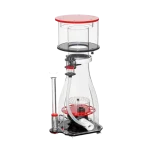
The Deltec PF-509 is a fluidized bed calcium reactor designed for marine (saltwater) reef aquariums. It belongs to Deltec’s PF Series (Mk 4 / Mk 5 generation depending on source) of fluidised calcium reactors. Its main purpose is to help maintain stable calcium and alkalinity levels in reef aquariums, which is essential for calcifying organisms like corals.
Key Features and Specifications
Model: PF-509 (Deltec PF509) – Mk4 or Mk5 fluidised calcium reactor.
Intended Use: For saltwater (marine) aquariums only. Not suitable for freshwater setups.
Aquarium Size Compatibility: It’s suitable for tanks up to about 450 litres (≈ 100 UK gallons, ≈ 119 US gallons).
Media Type & Amount: Comes with 2 kg of Rowalith C+ media. Some versions also include Hy-Carb media. The reactor’s media volume is about 2.2 kg.
Dimensions (Footprint): Approximately 180 mm × 140 mm × 500 mm (L × W × H). In imperial: about 7 1⁄8” × 5 1⁄2” × 19 3⁄4”.
Top Access: It has a full bayonet fitting on top, which allows for easier access to media for cleaning, filling, or inspection.
How It Works Fluidized Calcium Reactor PF 509 – Deltec
A fluidized calcium reactor dissolves media (such as a calcium carbonate or mixed calcium/alkalinity buffer media) using carbon dioxide (CO₂) to produce two important ions: calcium (Ca²⁺) and carbonate (CO₃²⁻). These ions are used by corals and other calcifying organisms to build skeletons, shells, etc. The CO₂ lowers the pH inside the reactor, allowing the media to dissolve. Water flows through the reactor, carrying dissolved ions into the main aquarium system.
Three main adjustable parameters determine how much calcium/alkalinity is delivered:
Water flow rate (or drip rate) through the reactor.
CO₂ bubble rate or CO₂ injection rate.
Operating time — how many hours per day the reactor is active.
Setup & Best Practices
Starting settings: For the PF509, you might begin with roughly 1 drip per second of water flow and 1 bubble per second of CO₂ when first operating. After a few hours, test the effluent’s carbonate hardness (dKH) to see how the reactor is performing. Adjust CO₂ or flow accordingly.
dKH Target: A typical target for the effluent (water exiting the reactor) is around 45–50 dKH. This corresponds with calcium levels often in the range of 800-900 ppm (though measurements and conversions depend on testing methods). If the dKH is lower, increase CO₂ bubble rate or possibly flow.
Operating Hours: It is often best to run the calcium reactor during the lighting period of your aquarium. Photosynthesis in corals/algae raises pH during light hours, which helps offset the acidifying effect of CO₂ used in the reactor. Many reefkeepers run the reactor 9-12 hours per day.
Maintaining Media Level: Keep the media level topped up. If media drops too much before topping, large fluctuations in output might occur. All models differ mostly in media volume; letting the reactor run half-empty diminishes capacity and efficiency.
Don’t Over-Fluidise: Make sure the media is fluidised (i.e. gently stirred by flow) but not overly so. If there is too much turbulence/fluidisation, fine particles may escape into your sump or display, causing cloudiness. The water above the media should appear reasonably clear.
Advantages & Potential Considerations
Advantages:
Provides continuous supply of calcium and carbonate buffering (alkalinity), which is critical for stony corals, coralline algae, etc.
More stable than manual dosing of calcium/alkalinity supplements, if set up properly.
Because it relies on natural dissolution via CO₂, less chemical waste or side-effect risk if parameters monitored (especially pH, CO₂, alkalinity).
Considerations / Challenges:
Requires CO₂ setup: bottle, regulator, solenoid, bubble counter. These add cost and complexity. The PF509 often does not include those parts.
Constant monitoring needed: measure effluent dKH, aquarium calcium and alkalinity regularly. If drift occurs (too high or too low), issues like coral stress, precipitation, or imbalance could result.
The pH in the effluent tends to be low (acidified by CO₂), so mixing and dilution into the aquarium must be considered. Also the CO₂ dissolved may influence entire tank pH unless well managed.
Maintenance: occasional cleaning, replacing media, ensuring fittings and seals are good to prevent leaks, and ensuring CO₂ injection remains consistent.
Summary
In summary, the Deltec PF-509 Fluidized Calcium Reactor is a well-designed mid-sized reactor for reef keepers who want a reliable, semi-automated way to maintain calcium and alkalinity in aquaria up to ~450 L. It balances capacity, manageable size, and decent output. When correctly set up — choosing proper media, flow, CO₂, operating times, monitoring — it can greatly simplify keeping stable water chemistry for demanding corals. But as with all reactors, its effectiveness hinges on proper use and regular monitoring.










Reviews
Clear filtersThere are no reviews yet.