
 Salt
Salt Fish Food
 Coral Nutrition
 Water Conditioners & Bacteria
 Trace Elements & Supplements
 Fishes
 Invertebrates
 SPS Corals
 LPS Corals
 Soft Corals
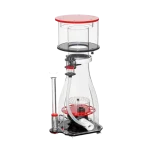 Protein Skimmers
 Fleece Filters
 Internal & Canister Filters
 HOB (Hang-on-Back) Filters
 Sump Filters & Overflows
 Reverse Osmosis – RO
 Sterilizers
 Filter Media
 LED Lighting
 LED Sump Lighting
 Smart LED Lighting Control
 Accesories & Components
 Wave Makers & Powerheads
 Return Pumps
 Dosing Pumps
 Air Pumps & Aeration
 Accesories & Connecters
 Algae Reactors
 BioPellet Reactors
 Calcium Reactors
 Zeolite Reactors
 Kalkwasser Reactors
 CO2 Systems
 Filtration Media
 Filter Accesories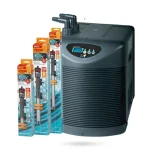
 Chillers
 Controllers
 Fan Chillers
 Heaters
 Thermometers
 Automation & Control
 Auto Top-Off (ATO)
 Water Tests
 Live Rock
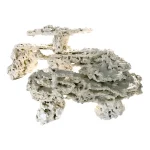 Rocks & Stones
 Gravel & Substrate
 Maintenance Accesories
 Custom Aquariums
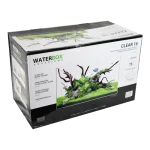 Waterbox Aquariums
Acclimation of Fish and Invertebrates in Aquariums


Floating Bag Method
- Turn off the aquarium lights.
- Dim the lights in the room where the shipping box will be opened. Never open the box in bright light—sudden exposure to intense light can cause severe stress or trauma.
- Place the sealed bag in the aquarium for 15 minutes (Figure A). Do not open the shipping bag at this stage. This step allows the water in the transport bag to gradually adjust to the aquarium temperature while maintaining high dissolved oxygen levels.
- After floating the sealed transport bag for 15 minutes, cut the bag just below the metal clip (Figure B) and roll the upper edge of the bag about an inch to create an air pocket at the rim. This will allow the bag to float on the water surface (Figure C). For heavy pieces of live coral that may sink the transport bag, place the bag containing the coral into a plastic container or specimen holder.
- Add half a cup of aquarium water to the transport bag (Figure D).
- Repeat this step every 4 minutes until the transport bag is full.
- Lift the transport bag out of the aquarium and discard half of the water in the bag (Figure E).
- Place the transport bag back into the aquarium and continue adding half a cup of aquarium water to the transport bag every four minutes until the bag is full.
- Carefully net the livestock from the transport bag and release it into the aquarium (Figure F).
- Remove the transport bag from the aquarium and discard the water.
Never release transport water directly into the aquarium.

2. Drip Method
This method is considered more advanced and is intended for sensitive inhabitants such as corals, shrimp, starfish, and wrasses. You will need an airline tube and must be willing to monitor the entire process. Gather a clean 3- or 5-gallon bucket that is designated exclusively for aquarium use. If acclimating both fish and invertebrates, use a separate bucket for each.
Step-by-Step Drip Acclimation Process
Follow steps 1-3 from the Floating Bag Method to equalize the water temperature.
Carefully pour the contents of the shipping bags (including the water) into the buckets (Figure G), making sure not to expose sensitive invertebrates to air. If needed, tilt the bucket at a 45-degree angle to keep the animals fully submerged (Figure H). You may need a wedge or support to keep the bucket in this position until enough water is added to level it.
Set up a siphon drip line from the main aquarium to each bucket using airline tubing. You will need separate tubing for each bucket.
Secure the airline tubing in place using a clip or holder. Place several loose knots in the tubing or use a plastic (non-metal) control valve (Figure I) to regulate the flow.
Start the siphon by gently sucking on the end of the airline tubing, allowing water to flow from the aquarium into the bucket. Adjust the drip rate to 2-4 drops per second (Figure J).
Once the water volume in the bucket doubles, discard half of the water and repeat the drip process until the water volume doubles again. This process should take about one hour.
Transfer the specimens into the aquarium:
Sponges, clams, and gorgonians should never be exposed to air. Carefully scoop them with a specimen bag, ensuring they remain fully submerged.
Submerge the bag in the aquarium and gently release the specimen.
Close the bag underwater, remove it, and discard both the bag and its water. Some diluted transport water will enter the aquarium, which is acceptable.
When handling live corals, never touch the fleshy part, as it can cause damage.
This method provides a slow, stress-free acclimation, making it ideal for delicate marine species.
NOTE:
Most invertebrates and marine plants are more sensitive than fish to changes in salinity. It is imperative to acclimate invertebrates to a specific gravity of 1.023-1.025, or severe stress or trauma may result. Test the specific gravity using a refractometer.
Important Facts
Be patient – Never rush the acclimation process. The total acclimation time for your new arrival should not exceed one hour.
Always follow the acclimation procedure, even if your new arrival appears to be dead. Some fish and invertebrates may seem lifeless upon arrival but will usually revive when the proper procedure is followed.
Never place an air stone in the transport bag during acclimation. This will rapidly increase the pH of the transport water and expose your new arrival to lethal ammonia levels.
Keep aquarium lights off for at least four hours after introducing the new addition to the tank.
Most invertebrates and marine plants are more sensitive to salinity changes than fish. It is crucial to acclimate invertebrates to a specific gravity of 1.023-1.025 to avoid severe stress or trauma.
Sponges, clams, and gorgonians should not be exposed to air. Follow the acclimation procedure, but instead of transferring the specimen from the shipping bag, submerge the entire bag in the aquarium and gently release the marine life. Seal the bag underwater by twisting the opening and then remove it from the aquarium. Dispose of both the bag and the water.
Some live corals produce excessive mucus during shipping. After following the acclimation procedure, hold the coral by its base (rock or skeleton) and gently shake it in the transport bag before placing it in the aquarium. To avoid damage, never touch the "fleshy" part of a live coral. Many coral species may not open for several days after being introduced to their new home. Allow a few days for the coral to adjust to the new aquarium conditions.

